
Pediatric Eye Exams
Protect Your Child's Vision and Open the Door to a Brighter Future
Your child’s vision is a precious gift that shapes how they see and interact with the world. It is critical that every child receives an in-person, comprehensive eye examination by an eye doctor in their first year of life and before entering Kindergarten, or sooner as recommended by their eye doctor. Vision has an enormous impact on social, motor, cognitive and academic achievement, and doctors of optometry are uniquely positions to help ensure a successful future.
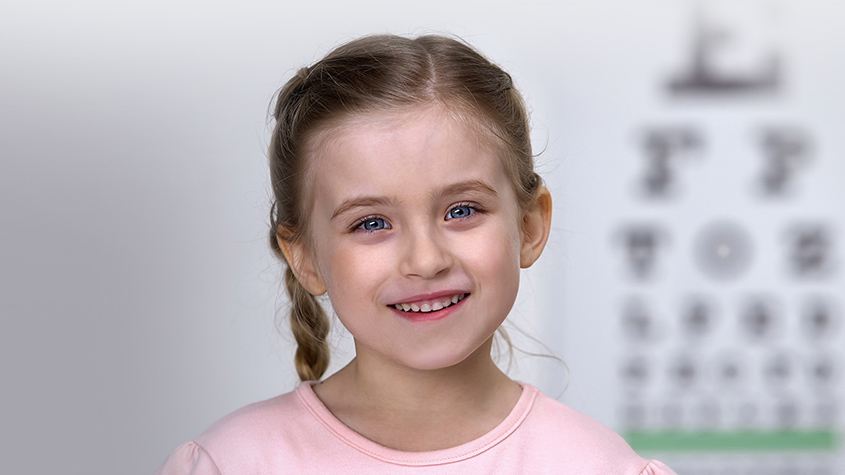
WHEN TO SCHEDULE A CHILDREN’S EYE EXAM
A child’s eyes go through rapid changes, especially in the first six years of life. But fewer than 15% of preschool children receive an eye exam by a professional, according to the Centers for Disease Control and Prevention. And while vision screenings have become ubiquitous in schools across the country, they aren’t enough. School vision screenings miss up to 75% of children with vision problems. And 61% of the children found to have eye problems through screenings never visit the doctor or get help, according to the AOA’s evidence-based clinical practice guideline, Comprehensive Pediatric Eye and Vision Examination.
1–3-year-old
A comprehensive baseline eye exam between the ages of 6 months and 12 months
3–5-year-old
At least one comprehensive eye exam between the ages of 3 and 5 to check for any conditions that could have long-term effects
School age
An annual, comprehensive eye exam starting before first grade
Signs of eye and vision problems
According to the American Public Health Association, about 10% of preschoolers have eye or vision problems, however, at this age generally do not voice complaints about their eyes. Parents should watch for signs which frequently indicate a vision problem
- Sitting close to the TV or holding a book too close.
- Squinting.
- Tilting their head.
- Covering an eye.
- Frequently rubbing their eyes.
- Short attention span for the child’s age.
- Turning of an eye in or out.
- Sensitivity to light.
- Difficulty with eye-hand-body coordination when playing ball or bike riding.
- Avoiding coloring activities, puzzles, and other detailed activities.
If you notice any of these signs in your preschooler, schedule an appointment with our caring and compassionate doctor of Optometry today!
How frequently should children undergo comprehensive eye exams?
An annual eye exam is crucial not only for visual health but also for detecting potential eye conditions early and identifying signs of other health issues through the eyes.
The American Optometric Association recommends that a child have his first comprehensive eye examination in infancy, between the ages of 6 to 12 months of age, then again between 3 and 5 years of age before entering Kindergarten and annually thereafter. Our Doctor of Optometry provides FREE comprehensive infant vision exams through the InfantSee program.
InfantSEE ® managed by Optometry Cares ®—The AOA Foundation is the American Optometric Association’s public health program designed to ensure that eye and vision care becomes an integral part of infant wellness care to improve a child’s quality of life. InfantSEE is a public health program with a mission to educate the public about the importance of comprehensive eye care beginning at 6 months of age.

Schedule your child's comprehensive eye exam today!
After Early detection, add early intervention lead to better outcomes.
Amblyopia(lazy eye)
Amblyopia, also known as occurs when the brain favors one eye, ignoring the visual input from the amblyopic eye, leading to visual pathway development to the brain from only one eye. Amblyopia typically begins in infancy or early childhood and is the most common cause of vision problems in children. Effective treatment for amblyopia includes a combination of 2 hours of patching a day with Optometric Rehabilitative Vision Therapy.
Strabismus(crossed eyes)
Strabismus affects between 2 and 4 percent of the population and is commonly associated with amblyopia. Strabismus occurs when the eyes are not aligned properly and either one or both eyes may turn inward (esotropia), outward (exotropia), upward (hypertropia), or downward (hypotropia).
Optometric Rehabilitative Vision Therapy is an effective non-surgical method for treatment of strabismus.
Convergence Insufficiency
Convergence Insufficiency is an eye condition that affects how the eyes work together when looking at nearby objects. This can cause blurry or double vision. Convergence insufficiency usually starts in childhood, but it can happen in people of all ages after a brain injury. If you have convergence insufficiency, getting early treatment with Optometric Rehabilitative Vision Therapy can help your eyes work together and alleviate symptoms.
KNOW ABOUT INFANTSEE
FREE AND COMPREHENSIVE VISION EXAMS FOR INFANTS
At Burbank Optometric Center, Inc., we specialize in InfantSEE® appointments for your baby’s vision exam. This assessment helps us understand their current and future vision development. We recommend scheduling their first vision check between six months and one year of age, and it’s completely free through InfantSEE®. During the appointment, which takes about ninety minutes, our qualified staff will conduct a thorough eye examination and address any concerns you may have.
Covid TBI
The University of Denver is leading the way in understanding the similarities between long COVID and TBI.
“If you list out the symptoms for postconcussive syndrome and you list out the expanding list of symptoms for long COVID, there is a pretty significant overlap.” “COVID infection looks like a brain injury; it has the same metabolic and inflammatory signatures.”
Optometric Rehabilitative Vision Therapy has been successfully addressing TBI symptoms such as blurred vision, double vision, dizziness, vertigo, spatial disorientation, visual midline shift. Call us today to schedule a consultation and find out if you could benefit from Optometric Rehabilitative Vision Therapy.
Quick Links
Helpful Articles
article_category: preventative
article_category: ocular disease management
article_category: aesthetics
article_category: products
article_category: surgical procedures
article_category: vision therapy
article_category: exotic
article_category: contact lenses
article_category: eye surgery co-management
article_category: health
article_category: services
article_category: eye health
article_category: general
article_category: cats
article_category: large animal
article_category: dogs
article_category: restorative
article_category: cosmetic
article_category: faqs
article_category: technology
article_category: eyeglasses
article_category: psychiatry
article_category: conditions
[]
article_category: ocular disease management
article_category: aesthetics
article_category: products
article_category: surgical procedures
article_category: vision therapy
article_category: exotic
article_category: contact lenses
article_category: eye surgery co-management
article_category: health
article_category: services
article_category: eye health
article_category: general
article_category: cats
article_category: large animal
article_category: dogs
article_category: restorative
article_category: cosmetic
article_category: faqs
article_category: technology
article_category: eyeglasses
article_category: psychiatry
article_category: conditions
[]
Flowbite is an open-source library of interactive components built on top of Tailwind CSS including buttons, dropdowns, modals, navbars, and more.
Check out this guide to learn how to get started and start developing websites even faster with components on top of Tailwind CSS.

All Eye Care Services
Find personalized eye care excellence with our comprehensive services. From eye exams to advanced diagnostics, trust us for all your vision needs.
Keep In Touch
For non-urgent questions or to learn more about our services, contact us today!
© 2026 Burbank Optometric Center, Inc.. All rights Reserved - Accessibility Statement - Privacy Policy - Sitemap
Managed and Designed by 